
 Start Your Free Trial
Buying a CRM usually goes wrong for the same reason. A company buys a system that is marketed as the answer to everything. A few months later the sales team never opens it, Excel is still in use, and customer information lives in inboxes, sticky notes and one person’s head.
There are more features available now than ever before, but the actual need in sales has not grown at the same pace. The need is still the same: know who you have talked to, what was promised, where the deal stands and what needs to happen next.
This article is written for anyone about to buy a CRM who wants to know what to demand from it.
When does a CRM become relevant?
Excel works surprisingly far. A salesperson who knows their own customers manages fine with a spreadsheet, a calendar and a good memory. Excel is not the problem in itself. The problem starts the moment there are several people involved and the work starts to need some automation.
A CRM becomes relevant when any of these starts repeating:
More leads come in than anyone has time to handle. Some go cold, not because the product is wrong, but because nobody remembered whose turn it was to call.
More people join. The new salesperson cannot see the previous conversation. The summer temp does not know what was promised to the customer. One person is the only one who can read the spreadsheet correctly.
Something has been done for the customer, but nobody is sure what. The proposal is in some folder, the meeting notes are in Teams and the next step is in one person’s calendar.
Management wants to see the state of sales without interviewing every salesperson separately. Excel gives you a list. It does not give you a picture of what is open, what is stuck and what is already lost.
In these situations a CRM is not a systems project. It is a way of moving customer information out of individual people’s memories into a place the whole team uses.
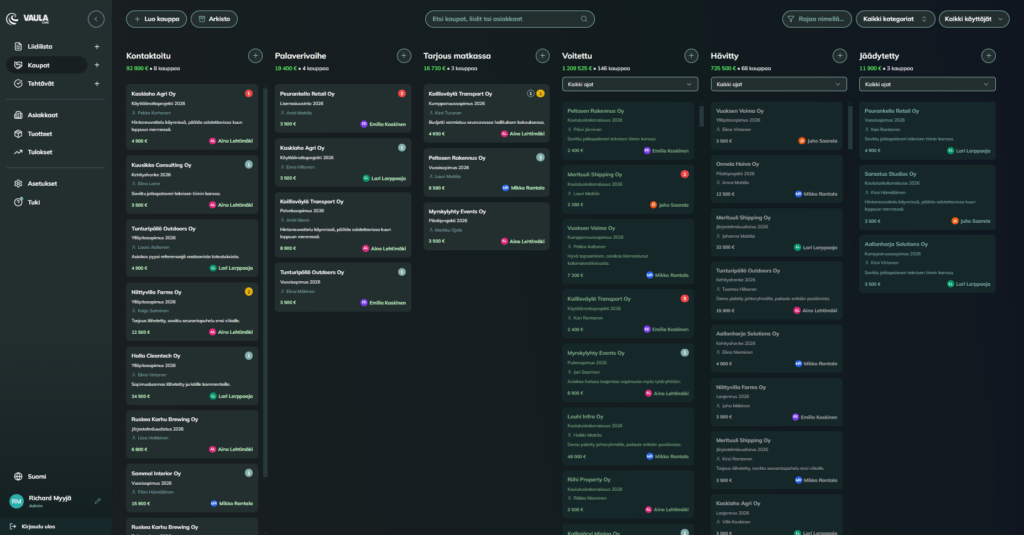
Why Excel stops being enough
Excel is easy to criticise, but it has one significant advantage. It is fast. That is why Excel is genuinely a better solution for many teams than a CRM nobody opens.
The limits show up later. Excel does not remind you that Mike was supposed to be called two weeks ago. Contact history does not accumulate systematically. Keeping a shared picture of the situation requires discipline, and the more people and customers there are, the harder it gets.
Excel scales for storing information. It does not scale for running a sales process.
Why a heavy CRM does not automatically solve the problem
A CRM can contain an enormous number of features and still fail at its most important job, which is capturing information.
If every contact requires filling in several fields, choosing the right classifications and moving through multiple views, the threshold for recording anything goes up. Under time pressure the result is that the more precisely the system demands information, the less ends up being entered.
That creates a contradiction. Management looks at the CRM and sees an empty pipeline where no selling appears to be happening. The salesperson sells all day but feels the system gives no help with the work and is just work on top of work.
Reporting can also be technically perfect, but if the underlying data was incomplete to begin with, the report only tells you what somebody remembered to type in.
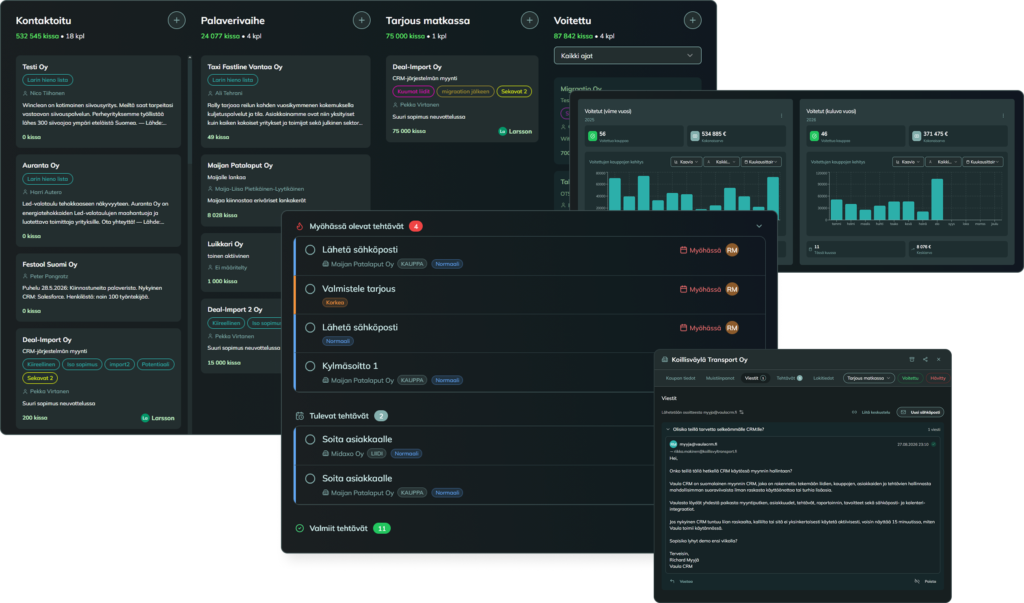
What do you actually need from a CRM?
In sales work the list is short. If these basics work well, the system carries. If these are heavy, no add-on module will save it.
Accounts and contacts. One view should show the company, the people, the latest conversations, open tasks and related deals. If answering “what has happened with this customer” requires opening three views, the system is already too slow for daily work.
Sales pipeline. The pipeline exists to show where deals are and where they stop moving. A good starting point is that a deal is in progress, won or lost. There is no point building complicated stages for a simple thing.
Tasks and reminders. Deals do not fall through because of missing features. They fall through because the next contact never happens. A system that notices a customer has gone too long without contact is worth more than ten automations.
Finding information. Search and a clear structure matter more than another dashboard. A salesperson opens the CRM in a hurry. If the customer does not come up in ten seconds, the CRM stays closed next time.
Reporting. Very few teams have an analytics department chewing everything into shape for them. The system needs to answer quickly: how much value is in the pipeline, where deals are stalling and where new leads come from.
What sales does not need
Systems are usually compared on features. The sales team and its daily reality decide whether the system actually gets used.
There is no sense in buying a hundred features when most of them stay buried in settings. You need the minimum that gets the organisation learning to use the system. Once it is in use and the processes are in order, then it is time to take sales to the next level.
Months-long implementation projects do not belong in modern systems either. If you have to hire an army of consultants to get a sales pipeline running, it is worth sleeping on it and asking what is actually being built here and what the whole point of the exercise was.
ERP, marketing automation and enterprise platforms are the right tools in the right situation. They are not the default choice for a team that wants to know who was called yesterday or where one particular deal stands right now.
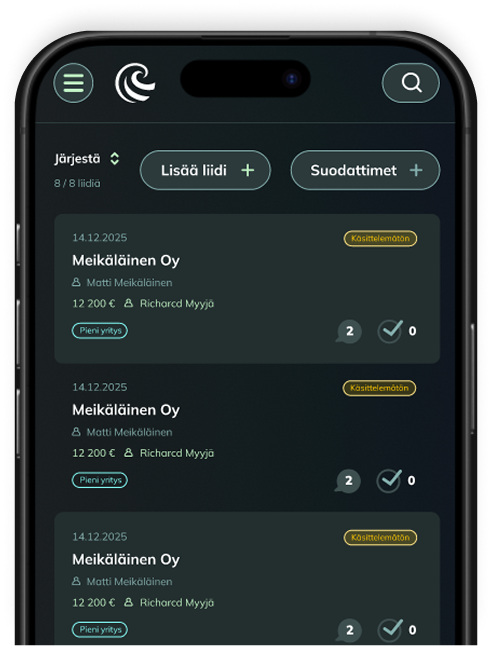
Ease of use is a core feature, not a nice extra
Even the best CRM is useless if the sales team does not use it. This is the most common reason a CRM purchase fails.
Adoption does not fail because the pipeline has too few stages. It fails because entering information feels like extra work.
The Finnish Ski Association was looking for a lighter and more cost-effective solution than traditional CRM systems to support its partnership sales. Sales Manager Herkko Mali described the outcome like this:
“Vaula feels like it was built for salespeople. It is light and clear to use.”
A good test for any CRM: does the system support people, or does it turn into work that people have to serve?ai muuttuuko se itse työksi, jota ihmisten pitää palvella?
What does a CRM really cost?
The licence is only part of the price. Add implementation, integrations, training and the working hours the sales team spends fighting with the system.
A typical trap is a cheap base package that does not include what sales actually needs. The second trap is project size. The system gets built with the sales organisation and administration for months on end, and eventually there is a price tag in the tens of thousands on the table before anyone knows whether this even works here. The third trap is dependency: the data is in the system, but getting it out requires a new project and a new invoice.
At Vaula we have been involved in plenty of those projects, which is why we built a price that includes the whole CRM. No packages, no separate implementation fees and no other unnecessary billing. The annual licence is 300 euros per person and the monthly licence is 29 euros per person. The pricing is transparent and predictable. Getting started takes under an hour and you do not have to buy coffee for a single consultant (unless you feel like buying us one).
What about the AI revolution everyone is posting about?
AI is usually sold alongside a CRM with the same logic as every other feature: more gadgets and more recurring monthly fees.
In reality AI should reduce costs by removing work that was never the salesperson’s job in the first place.
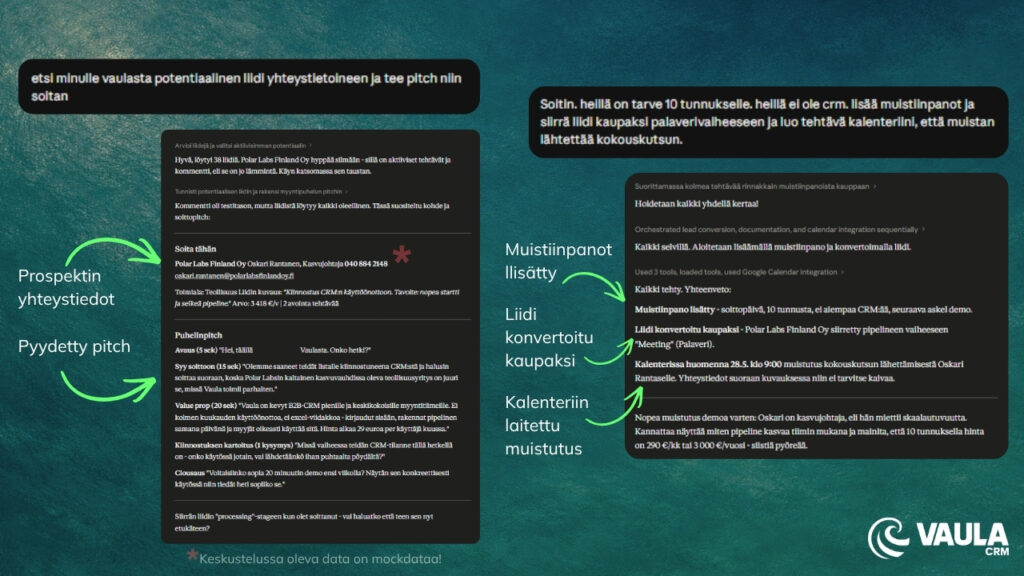
Vaula supports MCP, the Model Context Protocol, which allows an AI assistant to connect directly to the data and functions in the CRM. You can ask the assistant what was agreed with a customer or which deals have been left without a next task, and it can also record information on your behalf. In practice this means the salesperson does not even need to log into the CRM and can handle everything through the assistant.
It is this simple. The salesperson opens ChatGPT and asks what needs doing today. The assistant answers that there are x tasks and suggests starting with task Y. The salesperson asks for the contact details and a briefing, and the assistant pulls the information from the CRM. The salesperson makes the call, then tells the assistant how it went, and the assistant writes it into the CRM. The next time that customer is called, the CRM remembers what was discussed and agreed, and helps identify the next steps toward closing.
AI does not replace sales work. It replaces the data entry that has traditionally made salespeople neglect the CRM.
And this is included in the Vaula licence at no extra charge.
Read more: CRM without a user interface – Vaula and MCP →
Who Vaula is for and who it is not for
Vaula is at its best for organisations with 2 to 50 salespeople. It fits situations where Excel has become too thin or a previous CRM was left unused.
Vaula is not the right choice if you are looking for an ERP, a marketing automation platform, or a system that gets customised for months across several departments.
A quick test. If the problem is “we do not know what was last done for this customer”, a light sales CRM is the right direction. If the problem is “we need to connect marketing, finance and inventory into one platform”, the direction is a different one.
Our goal is to make selling more efficient, and that only happens by letting go of unnecessary manual processes. Vaula is of course worth connecting to your ERP and invoicing systems so that information moves between systems automatically. That works through the Vaula API.
How to get started
List what you need in order to get sales moving. Is it lead management, clear ownership, a pipeline, reporting or proposals. And think about what other choices you are willing to make in daily work.
Do you hold weekly meetings where you review the coming week’s tasks and targets from the CRM? Do you have active follow-up where the sales lead goes through what each person is doing? Do you have a plan for keeping the CRM data relevant and up to date? How does your model hold up if revenue and headcount double?
These are worth thinking through before buying a single licence. With a good partner you should be able to talk these through as well, and many vendors have seen a wide range of situations. So ask.
It is worth remembering that the real cost of a CRM is not the licence. It is the lost deal and the knowledge that walks out of the building with a salesperson.
A CRM has succeeded when the salesperson knows the next step, the team sees the same picture and the customer does not have to explain their situation all over again.
If you want to see what Vaula does, book a demo. We will walk you through it and work out how we could help your team.